
Viewing entries tagged
Antarctica

Comment

EMPEROR PENGUIN

Emperor Penguin, Fridtjof Sound (Mike Watson)

We had spent the night with the bow of MV Ortelius nudged into a large ice flow at the southern end of Fridtjof Sound (on the southern shore of the Antarctic Sound) and we waited for news of the weather and our chance of being able to fly to Snow Hill. There was some low cloud here, so we knew that things weren’t great for our immediate vicinity. Time ticked away as we watched Snow Petrels, Adelie and Gentoo Penguins as well as South Polar Skuas around the boat. Then BOOM! Emperor Penguin on the ice by the boat, spotted by AEL George Kennedy, thanks mate! Panic stations as folks made their way onto deck. It stood only a few metres off the bow, calling to some long-lost pal before it part waddled/part tobogganed to the water’s edge and gracefully slipped into the dark depths. It reappeared briefly but dived and was lost to sight. It must have swum far this time as we did not relocate it. I wonder if its disappearance had something to do with the pod of Orcas that was called soon afterwards? It would be able to hear them from a great distance! Everyone could now enjoy the Orcas too, as they cruised the large expanse of ice-free water behind us. They belonged to Type B – the Antarctic Peninsula form with a huge white oval mark on the side of the head. Shame we could not see their golden saddles though. The pod of around 10 included a calf or two and a couple of large males. Wow that was something, Antarctica in a nutshell! But OMG! David was still in the shower unfortunately and the Emperor had gone by the time he got dressed. Lucky for him it resurfaced sometime later about 100m away and stood on the ice with some Adelies and giant petrels. Phew!

Emperor Penguin, Fridtjof Sound (Mike Watson)

Type B Orcas, Fridtjof Sound (Mike Watson)

This afternoon saw us doing some non-birding activities. Scenic helicopter rides started and the saloon transformed into a departure lounge, minus duty free and soon most people were whizzing off to take a closer look at icebergs etc. The galley crew were also busy setting up the evening’s barbecue, a lovely tradition of these cruises! A quiet afternoon then? No. BOOM! Emperor Penguin off the port side. This one was even better than the previous day’s. Joking that it has been kidnapped on the Snow Hill recce, instead it must have spotted us from afar and made its way to check us out. They are inquisitive like that. This one was also braying and jumping on and off small ice floes, with some great angles and close-range images possible from through the scuppers on the fore deck! Another genuine WOW moment. Interesting to note that it appeared while my heli-ride slot was taking place, funny that! There was a ready-made celebration in the form of the excellent barbecue on the deck behind the bridge this evening. It will be hard to forget Tom Jones blasting ‘Sex bomb, sex bomb, you’re my sex bomb’ through the big speakers, with the Emperor Penguin in the distance. Truly surreal.

Emperor Penguin, Antarctic Sound (Mike Watson)

Emperor Penguin, Antarctic Sound (Mike Watson)

Emperor Penguin, Antarctic Sound (Mike Watson)
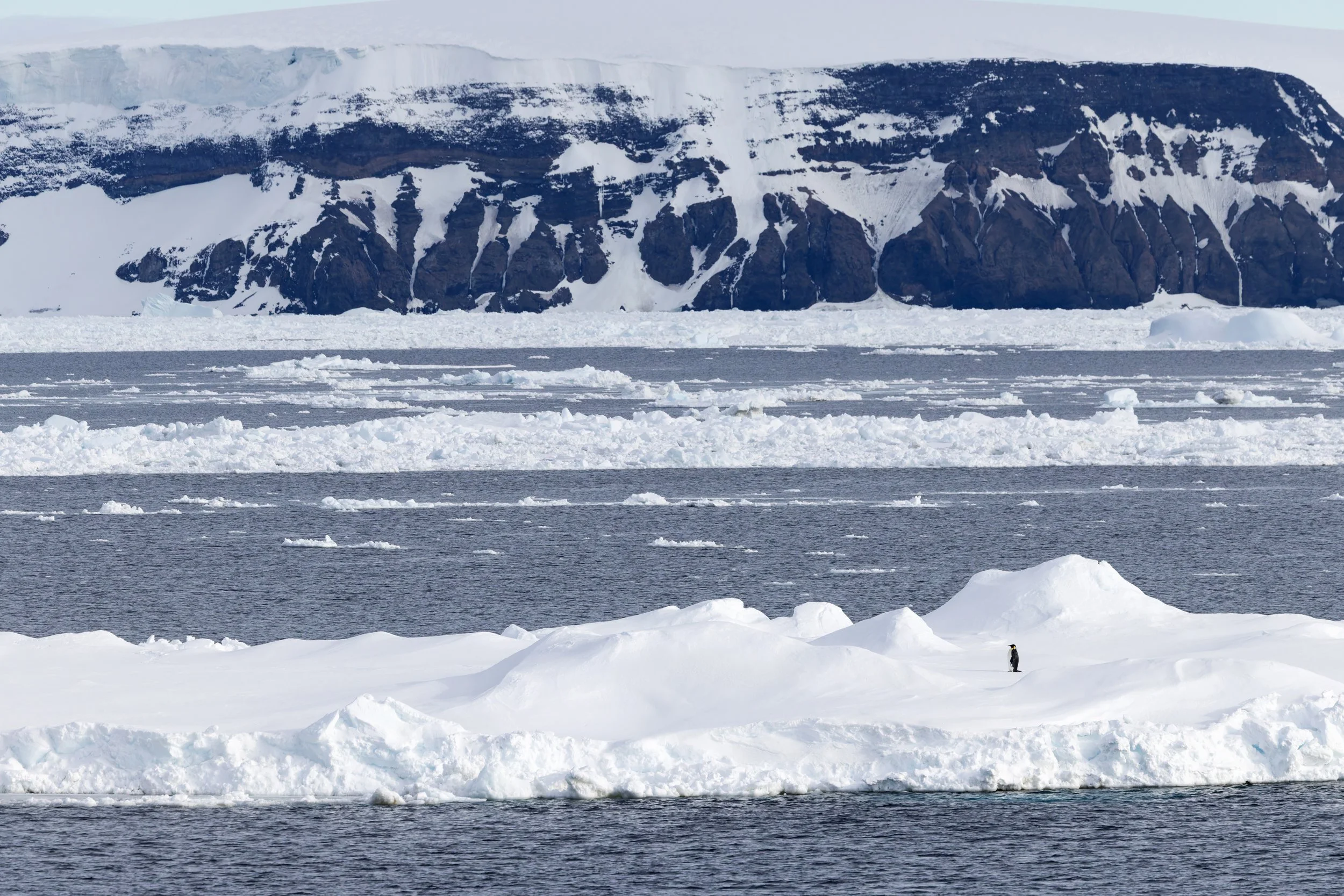
Emperor Penguin, Antarctic Sound (Mike Watson)

Emperor Penguin, Antarctic Sound (Mike Watson)

Emperor Penguin, Antarctic Sound (Mike Watson)

Emperor Penguin, Antarctic Sound (Mike Watson)

Comment

Comment

ANTARCTIC PETREL

Antarctic Petrel, 70NM north of South Shetland Islands (Mike Watson)

ANTARCTIC PETREL! I was lucky to be able to shout this a few times on my recent Birdquest, Antarctica: In Search of the Emperor Penguin tour. There’s more to it though. Last time I was down there I only saw one of these ‘Ice Petrels’. It is one of a trio of birds that you really need to go to Antarctica for, along with Emperor and Adelie Penguins. Snow Petrel occurs in South Georgia, South Polar Skua can be seen in the northern hemisphere and the Antarctic form of Imperial Shag is currently lumped. That’s it. Early one morning I was making my usual pre-birding visit to the hot chocolate machine in the saloon of MV Plancius when one flew past the window. In a panic I raced around the ship trying to get the message to the other folks on the tour, failing miserably and by the time I had gone through all the motions of that it was flying away from the ship, into the distance, not to be seen again. That was it, no photo, just a few views through spray-covered windows. Although I had just seen a terrific bird I felt deflated, a crazy outcome of what should have been an exciting experience. My pals said I was wrong to have attempted to get anyone else, birds often come and go quickly and if you want to see it then you ought to be on deck looking. I’ve come around to this way of thinking and it really is the only practical solution. If something significant turns up and sticks for a while then the expedition team can use the communications system to announce it.

Antarctic Petrel no.#1 in a force 10 snow storm wasn’t easy to see, it didn’t stay for long and while it did, viewing conditions were poor

After our first brief sighting, north of the South Shetland Islands (but south of the convergence), which was only seen by a couple of us, we had to wait for a few days until the next, which was in glorious sunshine in the Bransfield Strait and circled the boat for at least five minutes, allowing everyone to get up on deck and see it thanks to the tannoy. It was high-flying and often above eye-level, with two Pintado Petrels and after some time their circling became quicker and the trio gained height before zooming away somewhere.

Antarctic Petrel Sighting no. #2 is much more obliging complete with evening sunshine and blue sky!

We were all quite happy to see this one, but some folks arrived too late to get a look at its upperside. So, the pair of them that followed the boat for almost TWELVE HOURS (!!!) on our northward journey in the Drake Passage was very welcome indeed. We could take a rest, have something to eat etc and go out on deck and there they were, still zooming around the boat, in better light in the afternoon and with a gang of other excellent seabirds. A quite incredible encounter, after which we couldn’t wish for better. They were so close at times you could almost reach out and touch them as they sped past deck six! I even saw them from my cabin porthole. Alain had three together late in the afternoon, before all of the seabirds veered away, more or less at the convergence. What a great experience that was, even better than the penguins for me!

Antarctic Petrels nos. #3 & #4 were even better, almost twelve hours of buy one get one free!

The Antarctic Petrels occasionally dropped lower to water level, allowing some great looks at the upperparts

Antarctic Petrel is a powerfully built seabird, hardly surprising considering where it lives

Antarctic Petrel - Ian Lewington painting effect?

Antarctic Petrel through the wake

Following the leader, Black-browed Albatross, with an Antarctic Prion in tow

Pintado (or Cape) Petrel for comparison, I love the description in Howell’ & Zufelt’s excellent Oceanic Birds book that ‘Antarctic Petrel looks like a Pintado Petrel that has been organised’.

Snow Petrel - we were treated to so many great looks at the other ‘Ice Petrel’.

Comment